
Blog Apple Pay® and Google Pay™ Are Now Live in ezyCollect Payments. Here’s Why Your AR Team Should Care.
Apple Pay® and Google Pay™ Are Now Live in ezyCollect Payments. Here’s Why Your AR Team Should Care.
Now you can accept Apple Pay and Google Pay in Simplypaid.
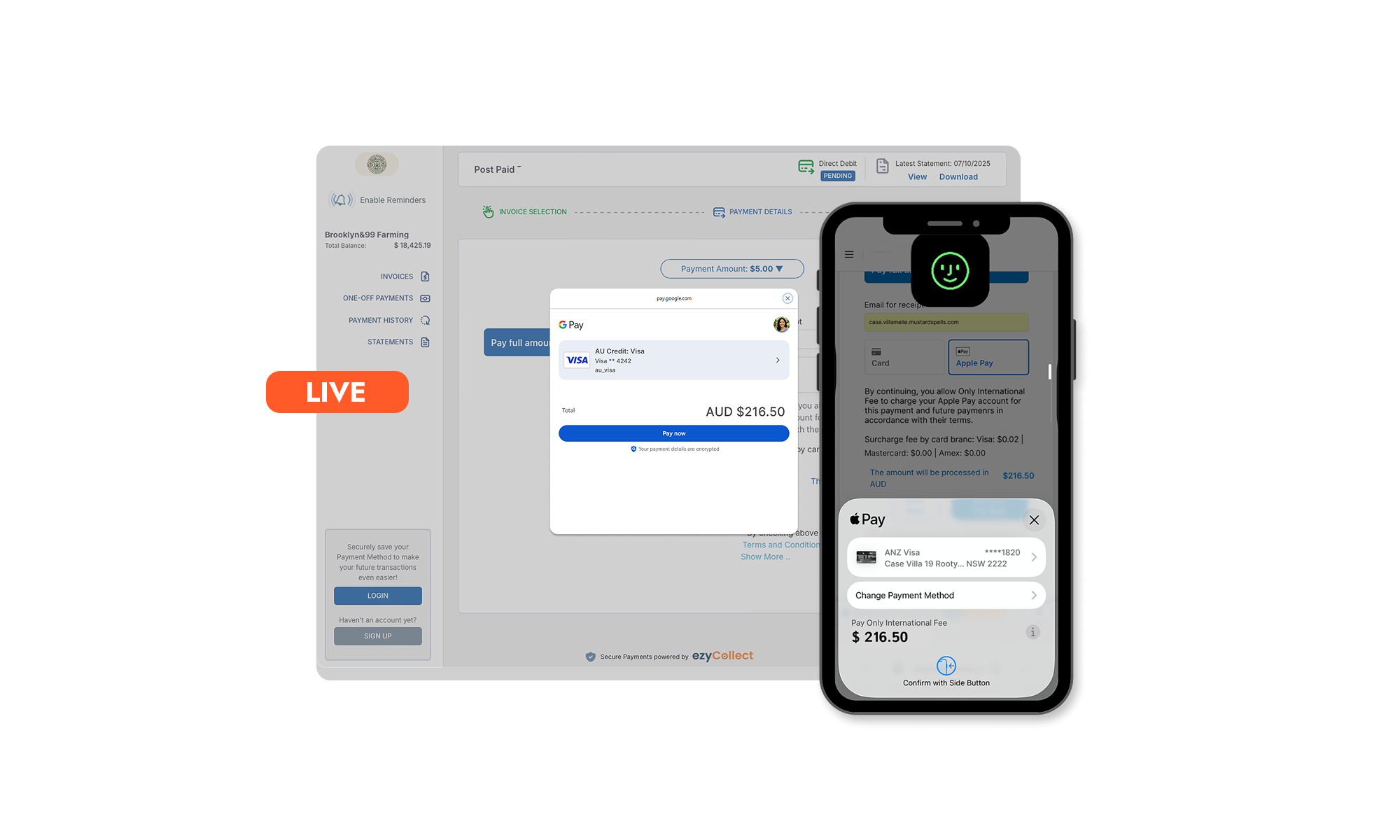
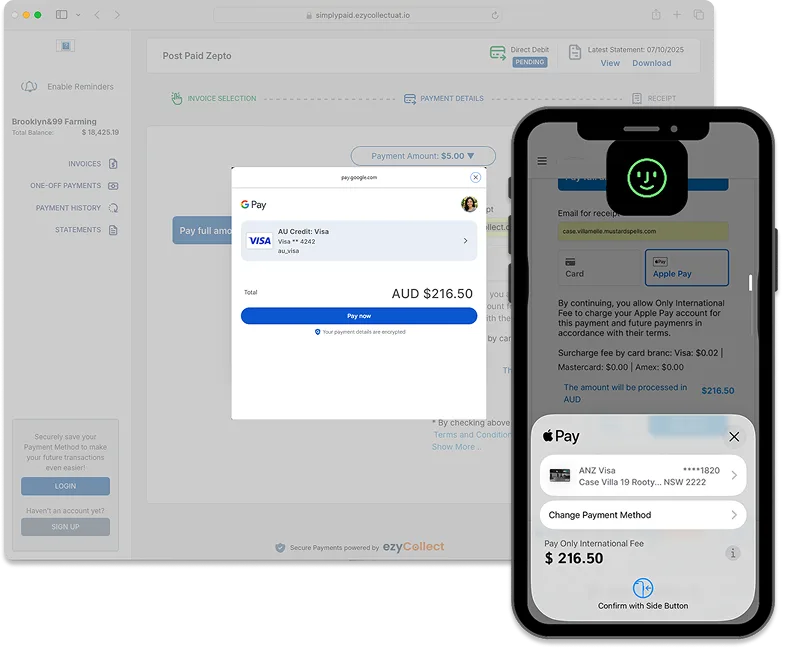
Apple Pay and Google Pay are now payment options in Simplypaid, the ezyCollect customer payment portal. A customer opens an invoice, authenticates with Face ID, Touch ID or a passcode, and the payment is done, with no card number typed in. Businesses already on ezyCollect Payments get the options automatically, for customers who hold a card in their wallet.
Apple Pay® and Google Pay™ have changed how people pay for everything. Groceries, subscriptions, flights – billions of transactions completed with a glance or a touch, no card details required.
Until now, paying a business invoice wasn’t part of that world.
Today, it is.
Your Customers Already Have It. Now They Can Use It to Pay You.
Apple Pay® and Google Pay™ are now live in Simplypaid, ezyCollect’s customer payment portal. Your customers can open an invoice, authenticate with Face ID, Touch ID or a passcode, and it’s done. No card numbers. No manual entry. No friction.
The wallet is already on their device. Your invoice just became the easiest thing they’ll pay today.
Why Apple Pay® and Google Pay™ Change the AR Game
These aren’t just convenient payment options. They’re the most trusted, most widely adopted digital payment methods on the planet – and bringing them into your B2B payment experience has a direct impact on when and how often you get paid.
The moment of intent becomes the moment of payment. Right now, there’s a gap between a customer opening your invoice and actually completing the payment. Manual card entry, especially on mobile, is where that intent quietly dies. Apple Pay® and Google Pay™ close that gap entirely. One confirmation and it’s paid.
Mobile payments stop being a barrier. Most payment processes weren’t designed for mobile phones. Apple Pay® and Google Pay™ were. Your customers moving between meetings, working from their phone, or simply not near a computer can now settle invoices in seconds from wherever they are.
Familiarity drives follow-through. Your customers already trust Apple Pay® and Google Pay™ with their most routine transactions. That trust transfers directly to paying your invoices. Familiar experiences get completed. Unfamiliar ones get deferred.
Enterprise-grade security, consumer-grade simplicity. Every Apple Pay® and Google Pay™ transaction uses device-level authentication and tokenisation, which means card details are never shared or stored. You get fraud protection and chargeback reduction built into every single payment, without adding a single step for your customer.
The Bigger Picture
Late payments are rarely about whether a customer can pay. They’re about whether paying was easy enough to do right now.
Apple Pay and Google Pay are the gold standard for removing that barrier. They’ve already transformed consumer payments. Now we’re bringing that same standard to B2B invoicing through ezyCollect.
Every invoice your customer opens is a window of intent. This update makes sure that window doesn’t close before they hit pay.

Related reading
 Payday Super is live. The quarterly float is gone. What CFOs are learning about the new working capital shape. Blog · 25 Sep 2026
 AI in Order-to-Cash: What It Actually Does for Accounts Receivable (and What’s Really Changed) Featured · 18 Sep 2026
 Chase Smarter. The AI trained on $8.8 trillion in B2B payments, now in your team’s corner.Blog · 12 Jun 2026